

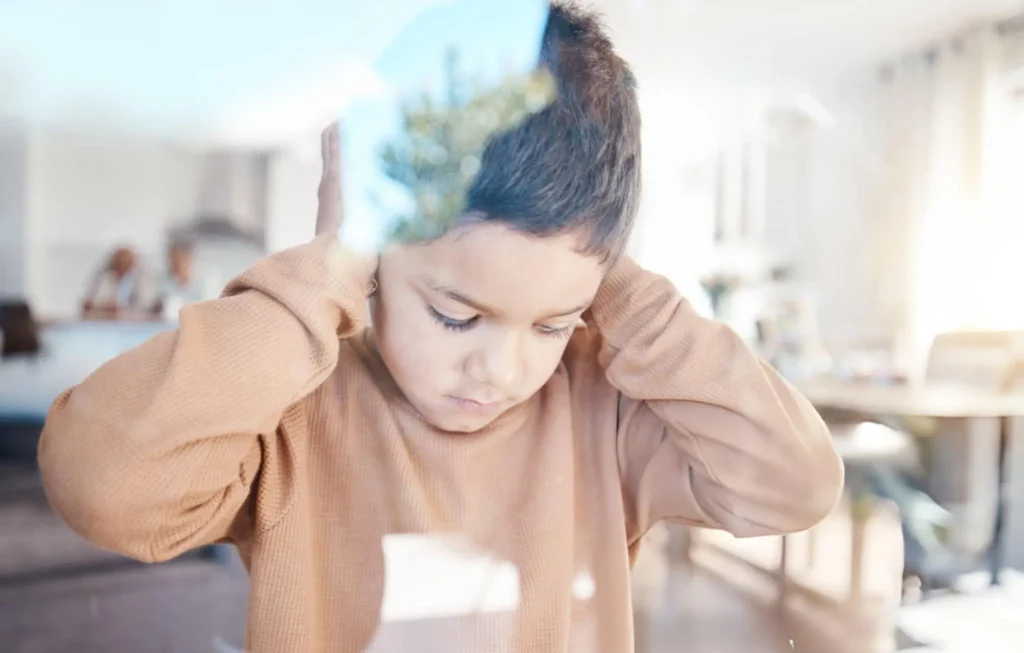
When a young child struggles to sit still, listen, or manage big emotions, many parents start to wonder about ADHD. The word “mimic” here is important. It means some behaviours can look similar to ADHD, not that they are the same thing. Stress and changes at home can affect how a young child behaves, and those changes can sometimes resemble ADHD signs.
Key Takeaways
- Family stress can sometimes create behaviours that look similar to ADHD, such as poor focus, restlessness, emotional outbursts, and sleep changes.
- ADHD is a real neurodevelopmental condition and should not be dismissed or ignored.
- A GP can help assess the bigger picture and guide next steps where appropriate.
Can family stress mimic ADHD in young children?
Family stress and instability can sometimes lead to behaviours that look similar to ADHD, such as poor focus, restlessness, emotional outbursts, impulsive reactions, and sleep changes. This does not mean stress causes ADHD, or that ADHD should be ignored. A GP can help look at the full picture and decide whether further assessment or support is needed.
First, ADHD Is Real, But It Is Not the Only Possible Explanation
ADHD is a genuine neurodevelopmental condition that begins in early childhood and can affect attention, activity levels, and impulse control. It is not a result of poor parenting or low intelligence, and it deserves to be taken seriously.
At the same time, ADHD is not the only reason a young child might seem restless or distracted. Many young children have a limited attention span and act without thinking from time to time. That is a normal part of early development.
The goal is not to rush to a label, but to understand what is actually going on for your child.
How Family Stress Can Show Up in a Young Child’s Behaviour
Young children often express stress through their behaviour rather than their words. They may not be able to say “I feel worried”, so it comes out in how they act.
Family changes that can affect a child’s behaviour include:
- Parental separation or conflict at home
- Moving house or changing schools
- Grief or loss in the family
- Financial pressure affecting the household
- A new sibling or a change in family structure
- Unsettled or changing daily routines
- A parent who is unwell or under significant stress
This does not mean anyone is to blame. Children respond to stress in different ways, and family stress is a normal part of life that many households experience. What matters is noticing the effect and responding with support.
ADHD-Like Behaviours That May Also Appear During Stress
Some behaviours linked to stress can overlap with what people associate with ADHD. Seeing these does not confirm anything on its own.
Behaviours that may appear during periods of stress include:
- Trouble focusing or finishing tasks
- Restlessness or difficulty settling
- Impulsive reactions or quick frustration
- Emotional outbursts or tearfulness
- Becoming more clingy or withdrawn
- Changes in sleep, such as trouble falling or staying asleep
- Difficulty following instructions
These behaviours can have many causes. They are worth paying attention to, but they are a starting point for a conversation, not a checklist for diagnosis.
Why It Can Be Hard to Tell the Difference
The Royal Children’s Hospital Melbourne notes that there is no single test that confirms ADHD. Diagnosis involves gathering information from more than one source, rather than relying on one appointment or one observation.
A young child’s behaviour can be influenced by sleep, health, development, emotions, and what is happening at home and at preschool or school. A behaviour that only appears during a stressful period may point in a different direction than one present consistently across many situations over a long time.
Australian child mental health resources support looking at the whole child. Many young children can have temporary social, emotional, and behavioural concerns, while some may need earlier and more focused support, while some may need earlier and more focused support.
AIHW data from 2013-14 reported that ADHD was the most common mental disorder among Australian children aged 4 to 11, affecting around 8.2%. This does not mean every restless or distracted child has ADHD, but it shows why careful assessment matters.
What Parents Can Watch Before Seeing a GP
If you are concerned, keeping some simple notes can help you and your GP build a clearer picture.
Worth keeping an eye on:
- How long has the behaviour been present
- Whether it happens at home, at preschool or school, or both
- What seems to trigger it or make it worse
- Your child’s sleep patterns and quality
- Appetite or energy changes
- Any feedback from teachers or educators
- Recent changes or stress at home
These notes are not about catching problems. They help you describe what you are seeing more clearly when you speak with a GP.
When Should You Speak With a GP?
As a general guide, it is worth speaking with a GP when behaviour concerns continue rather than settle.
Consider booking a GP appointment if:
- Behaviour changes have lasted for several weeks
- The behaviour is affecting preschool, school, or friendships
- Sleep is regularly disrupted
- Your child seems distressed or unhappy
- There has been significant family stress or change
- The behaviour is hard to manage day to day
You can raise these concerns during a general GP consultation, especially if behaviour, sleep, school, or family stress has become difficult to manage.
If your child’s behaviour has changed or is affecting sleep, school, or family life, a GP consultation can help you understand what may be contributing and what support may be appropriate.
What a GP May Ask or Check
A GP may ask about or review:
- Your child’s development and general health
- Sleep patterns and routines
- Hearing or vision, where relevant
- Physical health factors that can affect behaviour
- What is happening at home, including any stress or change
- Feedback from preschool, school, or childcare
- Your child’s emotional wellbeing and development
- Whether a referral to a specialist may be helpful
A GP can listen, assess, guide, and refer to a paediatrician, child psychologist, or child psychiatrist where clinically appropriate. A GP generally cannot confirm an ADHD diagnosis in a single visit or replace a specialist assessment where one is needed. This step-by-step approach can help guide appropriate support for your child.
A Gentle Next Step for Branxton Families
If you are worried about your child’s behaviour, you do not have to work it out on your own. A calm conversation with a GP can help you understand what may be happening and what support might help.
Branxton Healthcare provides GP consultations for families who want to discuss child behaviour, emotional wellbeing, sleep concerns, or development-related questions in a supportive setting. You can explore the clinic’s GP services to learn more.
FAQs
Can family stress look like ADHD in young children?
Yes. Stress can sometimes affect attention, sleep, emotional regulation, and behaviour in ways that may look similar to ADHD. A proper assessment is needed to understand what is actually happening for your child.
Does stress cause ADHD?
No. ADHD is a neurodevelopmental condition. Family stress does not cause ADHD, but stress may affect how a child behaves, copes, sleeps, and responds to everyday situations.
When should I speak with a GP about my child’s behaviour?
Speak with a GP if behaviour changes continue, affect school or preschool, disrupt sleep, cause distress, or become hard to manage at home.
Can a GP diagnose ADHD in a young child?
A GP can begin the assessment, review health and development factors, and refer to a paediatrician, psychologist, or psychiatrist where clinically appropriate. Diagnosis may involve specialist input and information from more than one setting, depending on the child’s age, symptoms, and clinical needs.