Insect bites usually cause itching, redness, swelling or mild pain, and many uncomplicated reactions settle with simple home care. Some bites become infected or trigger stronger reactions.
This article explains common bite types, how to treat them at home, and when a general practice assessment is worth arranging.
Key Takeaways
- Mosquito, bed bug and flea bites can look similar, so appearance alone may not confirm the cause.
- Most uncomplicated bites can be managed with washing, a cool compress and suitable symptom relief.
- Worsening symptoms may need GP assessment, while signs of anaphylaxis need emergency help.
What Are Insect Bites?
Insect bites happen when an insect feeds on skin or bites to defend itself. Saliva or other substances left in the skin can trigger a local reaction, and the response varies with the insect and the person.
Ticks and spiders are not insects, so their bites need different first aid advice.
Types of Insect Bites: Mosquito, Bed Bug and Flea Bites
Different insects tend to leave different clues, although none of these patterns is a reliable test.
| Bite type | Common appearance | Useful clues |
| Mosquito | Itchy, raised bumps | Exposed skin after time outdoors |
| Bed bug | Itchy spots, sometimes grouped | Noticed after sleep; spotting on the mattress |
| Flea | Small, very itchy bumps | Feet, ankles or lower legs; pets at home |
| Biting midge or fly | Itchy bumps or local swelling | Outdoor areas, often near water |
| Ant | Redness, swelling or pain | Varies by species |
Can Pictures Help Identify Insect Bites?
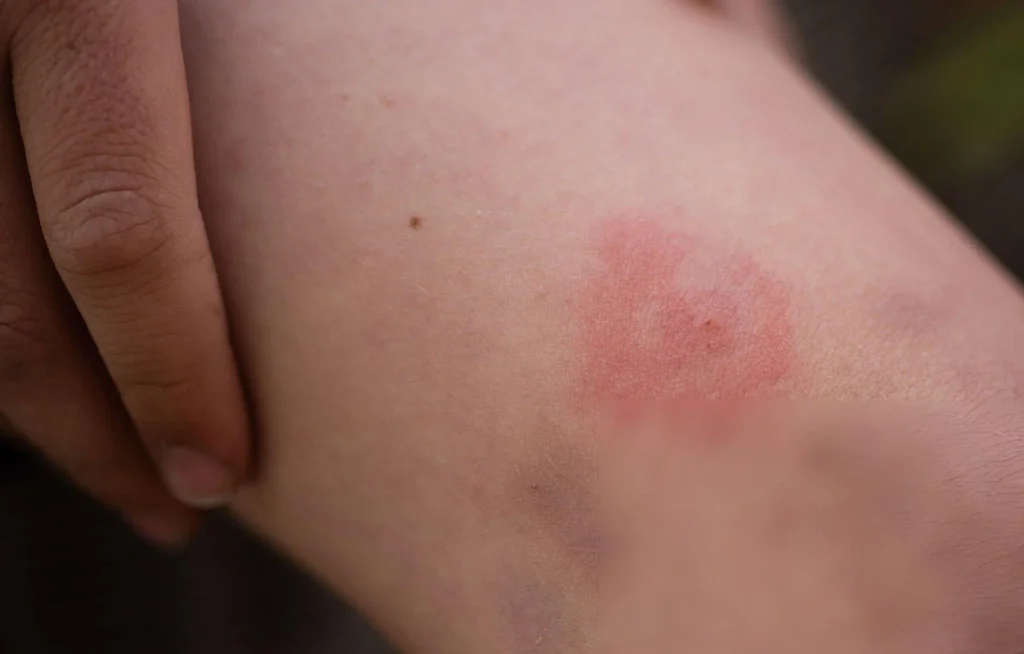
Pictures can help you compare skin reactions, but different bites often look alike. Where the bites appear, when they started, and any signs of insects at home are usually more useful clues than appearance.
Example images are a guide only and cannot replace a clinical assessment.
What Are the Common Symptoms of Insect Bites?
Common symptoms include itching, redness or a change in skin colour, raised bumps or welts, mild swelling, tenderness and occasional blisters. Redness can be harder to see on darker skin, so warmth, pain and swelling matter too.
Some children react more strongly, particularly to mosquito bites. A large, itchy bite is not automatically infected.
How to Treat Insect Bites at Home
Most uncomplicated bites can be managed with these steps:
- Wash the area gently with soap and water.
- Apply a cool compress or a cold pack wrapped in a cloth to ease swelling. Avoid placing ice directly on the skin.
- Try not to scratch, as broken skin can become infected.
- Ask a pharmacist about suitable products for itching or pain, depending on age and health conditions.
- Watch how the bite changes over the next few days.
Parents should check age limits on any antihistamine or medicated cream before using it. For more detail, see Healthdirect’s guidance on insect bites and stings.
When Should You See a GP for an Insect Bite?
A GP assessment may be appropriate if a bite is becoming more painful, looks infected, is not improving after several days or comes with other concerning symptoms. Warning signs include:
- Redness, warmth, swelling or pain that is spreading or increasing
- Pus or discharge from the bite
- Fever or feeling unwell after a bite
- A child who is increasingly uncomfortable or unwell
Cellulitis is a bacterial skin infection, and a GP can assess whether a reaction looks inflammatory or infected. Not every swollen bite needs antibiotics.
Swelling around the eye, a bite in the mouth or throat, or rapidly worsening illness needs urgent care rather than a routine appointment.
Bites or stings involving the mouth or throat, significant swelling near an eye, or rapidly worsening symptoms may need urgent medical assessment rather than a routine GP appointment. Severe symptoms, including breathing difficulties or signs of anaphylaxis, require immediate emergency assistance.
If a bite is not improving or shows signs of infection, a GP can assess it and discuss appropriate care or follow-up.
Can Insect Bites Cause Serious Allergic Reactions?
Severe allergic reactions are uncommon after ordinary insect bites, but they can happen, particularly after some stings. Warning signs of anaphylaxis include:
- Difficult or noisy breathing
- Swelling of the tongue or throat
- Persistent cough, wheeze or hoarse voice
- Severe dizziness or collapse
- A child becoming pale and floppy
- Abdominal pain or vomiting associated with an insect bite or sting allergy
Anaphylaxis is a medical emergency. Lay the person flat and do not allow them to stand or walk. If breathing is difficult, they may sit with their legs outstretched. Give an adrenaline autoinjector immediately if available, then call Triple Zero (000). Follow the person’s ASCIA action plan if they have one. Anaphylaxis can occur without a rash.
How Can a GP Help With Insect Bites?
A GP can ask when and how symptoms began, examine the skin, and assess for infection, allergy or another cause. They may recommend treatment, follow-up or referral where needed.
Parents concerned about a child’s bite can also read about Branxton’s children’s healthcare services.
How Can You Prevent Insect Bites?
Use a repellent containing DEET or picaridin and follow the label, particularly for young children. Wear loose, long clothing outdoors, keep flyscreens in good repair and empty standing water around the home.
For suspected flea infestations, seek appropriate veterinary advice for pets and clean affected household areas. For bed bugs, inspect sleeping areas and consider licensed pest management. Insect repellent will not eliminate an established infestation.
Insect Bite Care in Branxton
Adults and families in Branxton can see a GP for insect bites that are worsening or not settling, as part of everyday general practice care.
If you or your child has a bite like this, you can book a GP appointment at Branxton Healthcare to discuss your symptoms and next steps.
Frequently Asked Questions
How long do insect bites usually take to heal?
Many uncomplicated bites improve within several days, though reactions vary. A GP should assess bites that worsen or do not improve.
How can you tell bed bug bites from flea bites?
Location and exposure clues can differ. Fleas often bite the feet and ankles, while bed bug bites are usually noticed after sleep. Appearance alone cannot reliably identify the insect.
Why do some insect bites cause more swelling than others?
Local immune reactions vary, especially in children. Swelling alone does not mean infection or anaphylaxis.
What if you do not know which insect bit you?
If symptoms are mild and the cause is unknown, basic home care is often appropriate. Seek medical advice for worsening or unusual symptoms. Suspected tick or spider bites need specific first-aid guidance, as some can require urgent treatment.
References and Resources
Healthdirect Australia (n.d.) Insect bites and stings, Healthdirect website, accessed 19 October 2026.
Healthdirect Australia (n.d.) Bed bugs, Healthdirect website, accessed 19 October 2026.
Better Health Channel (n.d.) Fleas, Better Health Channel website, accessed 19 October 2026.
Australasian Society of Clinical Immunology and Allergy (2026) First aid for anaphylaxis, ASCIA website, accessed 19 October 2026.
NSW Health (n.d.) Bite prevention, NSW Health website, accessed 19 October 2026.